Your Flyer Is Not a Facebook Post
I see this all the time. A local business puts real effort into a flyer – probably made in Canva, bright colours, plenty of information, logo in the corner – and then uploads the whole thing to Facebook as a single image.
- No explanation.
- No supporting text.
- No context.
- No Call To Action (really).
- No urgency.
- No link.
Just the flyer, sitting there like it’s supposed to do something on its own.
A few weeks later, the same business owner is telling me that social media doesn’t work.
Well, of course it doesn’t. Not like that.
The Mobile Problem Nobody Considers
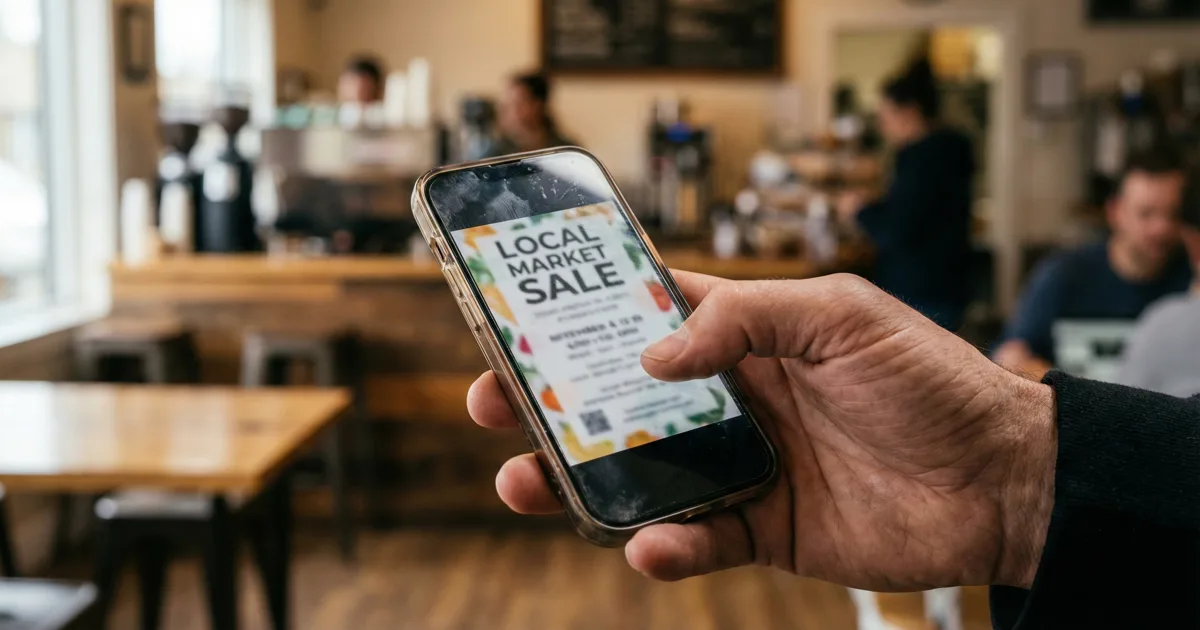
The vast majority of people looking at your Facebook page are doing it on a phone. Which means that carefully designed A5 or A4 flyer, full of text and detail, is being squeezed into a tiny rectangle on a 4.5 to 6-inch screen.
- Nobody is zooming in.
- Nobody is squinting at your pricing.
- Nobody is pinching and dragging to read your contact details.
They scroll past.
Not because they don’t care about what you offer, but because making sense of it requires effort they weren’t planning to spend. On social media, you get about half a second of attention. A dense flyer image wastes it entirely.
Six Hours vs Umpteen Years
When you post a flyer image on Facebook, you’re buying a brief window of attention. That post sinks into timeline history within hours. By the following morning, for most of your followers, it’s effectively invisible.
Take that same content and turn it into a proper page on your website, though, and something very different happens.
- It gets indexed. It becomes searchable.
- It gives Google and the AI search tools something to reference when someone types in a question you can actually answer.
- People can find it a week later, a month later, years later.
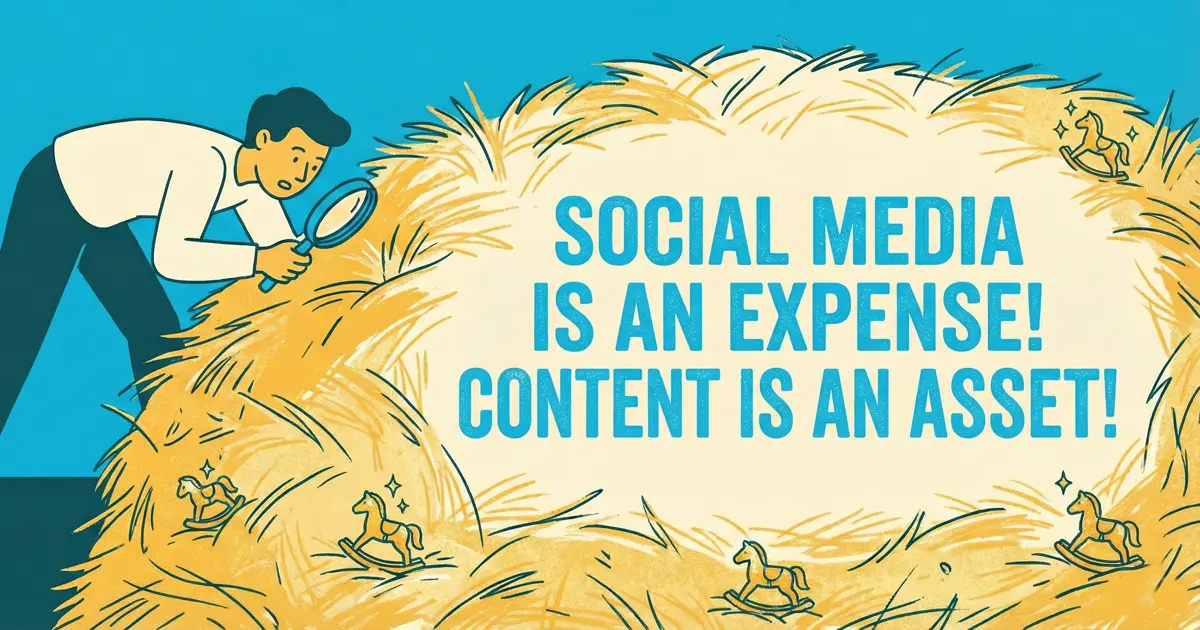
A well-written website page works for you continuously, without you touching it again. A Facebook post has roughly a six-hour shelf life on a good day (but only a second for most people who see it). The comparison isn’t flattering for social media, but it’s the reality.
Your Flyer Is Raw Material, Not the Finished Product
Here’s where I think the thinking goes wrong. Businesses treat the flyer as the end product when it’s actually just the starting point. Everything you need is already in it –
- your offer,
- your pricing,
- your messaging,
- the benefits you’re promising.
That’s genuinely useful content. It just needs to go somewhere that can do something with it.
Instead of uploading the image, pull the text out of it. Expand on it properly. Build a page on your website that explains the offer clearly, uses photos that actually work on a mobile screen, and has a call to action a real person can follow. Then share that page on Facebook with a proper link and a sentence or two explaining why someone should click it.
Now social media is doing what it’s actually good at – creating a moment of awareness and pointing people somewhere useful. Your website handles the rest.
The Credibility Gap
There’s a psychology to this as well, and it matters more than most people realise. When someone sees a business that only posts graphics on Facebook, it tends to feel small. Temporary, almost. A hobby. Like a market stall rather than an established operation (no disrespect to people who have a market stall as part of their business). When that same person lands on a well-structured website page with real information and a clear offer, the perception shifts.
Same business. Same offer. Completely different impression. And in most cases, the sale goes to whoever feels more trustworthy, not whoever posted most recently.
The Honest Bit
If your current approach is “design a flyer, upload it to Facebook, and wait” – that’s not a marketing strategy. It’s optimism dressed up as effort.
Build the content on your website first. Use social media to point people towards it. Your website builds credibility and search presence over time. Social media creates a brief moment of visibility. They do different jobs, and treating them as interchangeable is why so many local businesses feel like they’re putting in the work without seeing the results.
Your flyer is a starting point. Make it the beginning of something, not the whole thing.
Still Posting Flyers on Facebook? Let’s Sort That Out.
Why doesn’t posting a flyer image on Facebook actually work?
Most people see Facebook on a phone, which squashes a detailed flyer into something unreadable. Nobody stops to zoom in, so they scroll straight past. Even if someone does notice it, the post disappears from feeds within hours and leaves nothing behind.
Should I stop using Facebook for my business altogether?
Not at all, but use it for what it’s actually good at – creating a brief moment of awareness and pointing people somewhere useful. Post a link to your website page with a line or two about why they should click. That’s how social media is supposed to fit into a marketing plan.
How do I turn my flyer content into a website page?
Pull the text from your flyer, expand on it properly, and build a page that explains the offer clearly and works on a mobile screen. Add a real call to action – a phone number, a booking link, a contact form. Then use Facebook to send people to that page, rather than hoping they’ll read a squashed image.
Why is website content better for long-term results than social media posts?
A page on your website gets indexed by Google and referenced by AI search tools. Someone can find it six months after you published it, simply because they searched for what you offer. A Facebook post has a useful life measured in hours, then it’s effectively gone regardless of how good it was.
Does it really matter if my online presence looks polished?
Yes, more than most people think. A business that only posts graphics on social media tends to feel less established to a potential customer. A proper website page with clear information builds trust before you’ve even spoken to them. Same business, very different impression, and that impression often decides whether they contact you or someone else.