

There’s a belief that refuses to die. If you want traffic, you need social media. Post daily. Stay active. Keep your name in front of people. Build an audience.
Sounds reasonable.
But it’s also not entirely true.
Because there’s a blog (my own personal blog), with no real social media presence, no consistent sharing, no effort spent pushing content out, pulling in tens of thousands of page views every month.
The numbers make the point
- No strategy.
- No promotion plan.
- No posting schedule.
- Just writing content and publishing it.
That’s it. I write because I enjoy writing.
Over 30,000 page views in a single month.
Regular months sitting around 13,000 to 15,000. Somewhere between 1,000 and 2,500 unique visitors most months. All without sharing posts across Facebook, without chasing engagement, without trying to build a following.
The traffic comes from search. Mostly Google. Likely a bit of AI search creeping in as well.
And the stats show the growth, as well as (more detailed analysis) show the impact of regular posting and dips in the frequency of new content.
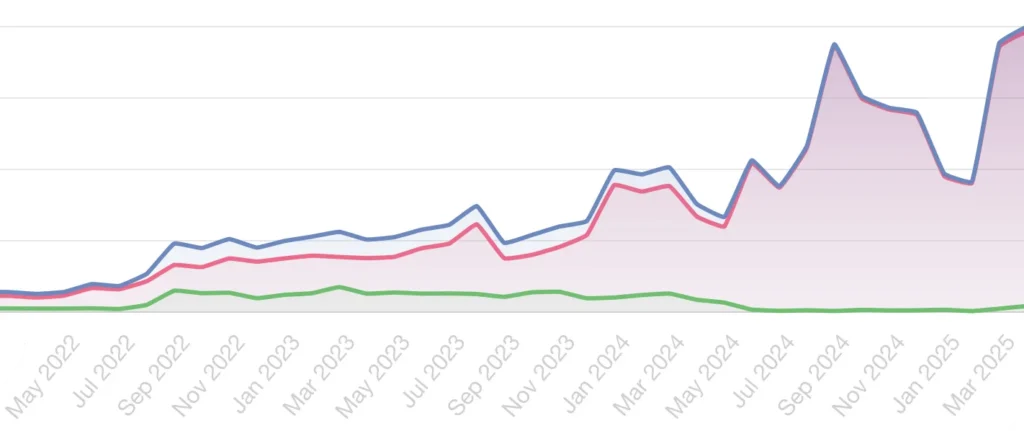
The content gets found. That’s the point.
What’s actually happening behind the scenes
When you publish something useful, something that answers a question or covers a topic people are genuinely interested in, it doesn’t just sit there.
Search engines pick it up. They work out what it’s about, who it’s for, and where it fits. Then they start showing it to people who are actively looking for that topic.
Not people scrolling.
People who are searching.
That’s a completely different mindset. They’re already interested. Already engaged. Already looking for something specific. And your content appears right in front of them.
No hashtags required.
Why this goes against what most people believe
Most small business owners have been conditioned to think visibility comes from activity. If you’re not posting, you’re invisible. If you’re not engaging, you’re forgotten. If you’re not on social media, you don’t exist. The data says something very different.
My personal blog is content that isn’t being shared anywhere, still being read by thousands of people every month. Not because it’s being pushed. Because it’s being found.
That’s the bit that gets overlooked.
Where social media actually fits
This isn’t an argument against social media. It has a place. It keeps your name visible (a bit), helps you stay in touch with people who already know you (yes, already know you), and gives your brand a bit of personality.
But it’s not the engine driving discovery in most cases. Search is.
Social media is interruption.
Search is alignment.
One catches people mid-scroll.
The other meets them exactly when they’re looking.
The takeaway most people miss
You don’t need to be everywhere. You don’t need to post every day. You don’t need to chase engagement.
I know people who post often on TikTok (for example) but none of their traffic or sales come from all that effort. The same people post daily on Facebook but data shows that the bulk of their website visitors come from search engines. Effort in the wrong place.
What you need is content that exists on your website, answers real questions, and stays there long enough to be found. That’s what builds traffic. That’s what brings people in without constant effort.
And that’s how a personal blog, with no social media push at all, ends up pulling in up to 30,000 page views in a month.
Not through noise. Through relevance.
Still think you need social media to grow? Let’s clear a few things up.
Can a blog really get traffic without social media?
Yes, and it happens more often than people realise. If your content answers questions people are actively searching for, search engines will surface it, no social sharing required. Consistent, relevant writing is what drives organic traffic over time.
How does search traffic differ from social media traffic?
Social media catches people mid-scroll, when they’re not necessarily looking for anything. Search traffic arrives with intent, someone already has a question and they’re looking for an answer. That makes search visitors generally more engaged and more likely to actually read what you’ve written.
How long does it take for blog content to rank in search?
It varies. Some posts pick up traction within weeks, others take several months. There’s no fixed timeline, but content that covers a specific topic clearly and answers real questions tends to build momentum over time rather than spiking and disappearing.
Do I still need social media if I want to grow my blog?
Not necessarily. Social media is useful for staying visible with people who already know you, but it’s rarely what drives new discovery. Search does that. If your goal is traffic from people who’ve never heard of you, well-written content on your own website is a more reliable long-term strategy.
What kind of content works best for organic search traffic?
Content that answers a genuine question, covers a topic with some depth, and stays on your site long enough to be indexed and ranked. It doesn’t need to be long for the sake of it, it needs to be useful. Posts that address something specific tend to outperform broad, vague content.


